
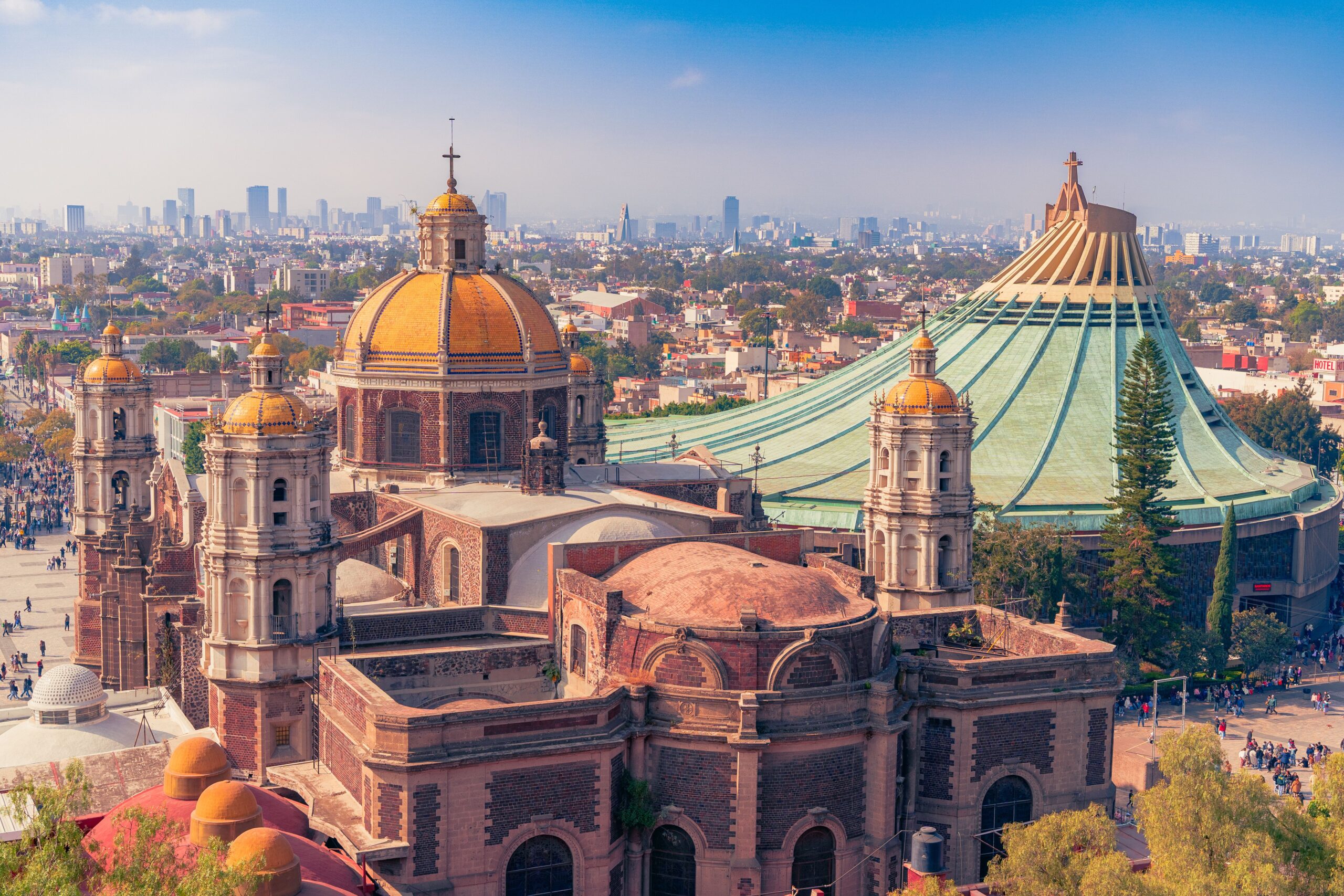
Basilica of Our Lady of Guadalupe: Visiting Guide, Mass Times, & History
| Detail | Specification |
| Location | Villa de Guadalupe, Gustavo A. Madero, Mexico City, Mexico |
| Admission | Free for all basilicas and grounds; Museo de la Basílica MX$10–$20 |
| Dress Code | Modest attire required; covered shoulders and knees; remove hats upon entry |
| Best Time to Visit | Weekday mornings (8:00 AM – 10:30 AM); avoid December 9–12 unless seeking massive feast day crowds |
The Basilica of Our Lady of Guadalupe is the world’s most visited Marian shrine, drawing roughly 20 million pilgrims each year to the foot of Tepeyac Hill in northern Mexico City. Built to enshrine the original 1531 tilma (cloak) bearing the image of the Virgin Mary, the complex stands as Mexico’s preeminent spiritual and cultural sanctuary.
Practical Visitor Guide & Logistics
The sanctuary grounds remain accessible daily from 6:00 AM to 9:00 PM, with no entrance fees or booking required to access the main plaza or either basilica.
┌──────────────────────────────────────────────────────────┐
│              Tepeyac Hill (Cerrito Chapel)               │
│                            ▲                             │
│                            │ Stairs & Garden Route       │
│                 Old Basilica (1709)                      │
│                            ▲                             │
│                            │ Plaza de las Américas       │
│                 New Basilica (1976)                      │
│                [Moving Walkways & Tilma]                 │
│                            ▲                             │
│                  Main South Entrance                     │
└──────────────────────────────────────────────────────────┘
- Visiting Basilica of Guadalupe Mass Times: Public liturgies run almost hourly at the high altar of the New Basilica, beginning at 7:00 AM and concluding at 8:00 PM on weekdays, with additional celebratory liturgies running continuously on Sundays.
- Public Transit Options:
-
-
Take Metro Line 6 (Red) or Line 8 to station La Villa–Basílica, then walk two blocks north along Calzada de Guadalupe.
-
Board the double-decker Metrobús Line 7 heading north along Paseo de la Reforma directly to the Garrido or Indios Verdes perimeter stops.
-
-
Etiquette for Travelers: Photography is permitted inside the New Basilica without flash, though tourists should refrain from crossing the primary nave during active consecrations. Move along the perimeter aisles when services are in progress.
Historical & Theological Significance
The sanctuary marks the site where an indigenous Chichimeca peasant, Juan Diego Cuauhtlatoatzin, reported four apparitions of the Virgin Mary in December 1531. According to church history, the local archbishop demanded proof of the Marian visions. Juan Diego gathered Castilian roses blooming unseasonably in the rocky desert terrain of Tepeyac and carried them in his tilma (an agave-fiber cloak). When he opened the cloth before the bishop, the roses spilled out, revealing the miraculous imprint of the Virgin Mary.
The image holds deep symbolic resonance: the Virgin is depicted with indigenous physical features, wearing an Aztec maternity sash, and wrapped in a star-patterned turquoise mantle. The tilma itself has survived nearly five centuries without organic decay or chemical sizing, surviving an accidental acid spill in 1785 and a targeted bomb detonation beneath the altar in 1921 without damage. Juan Diego was canonized as the Roman Catholic Church’s first indigenous American saint by Pope John Paul II at this shrine in 2002.
What to See Inside the Sanctuary Complex
The compound combines 18th-century Spanish colonial architecture with late-20th-century modernist engineering:
- The New Basilica (Basílica Moderna): Designed by Pedro Ramírez Vázquez and completed in 1976, this circular, 10,000-seat structure was engineered to ensure all visitors have an unobstructed sightline to the sacred relic. Beneath the main altar, automated moving walkways ferry visitors directly underneath Juan Diego’s original tilma, preventing bottlenecks while allowing continuous viewing.
- The Old Basilica (Templo Expiatorio a Cristo Rey): Completed in 1709, this baroque cathedral features classic yellow cupolas and red volcanic tezontle stone. Due to Mexico City’s soft subsoil, the historic structure tilted drastically over two centuries. Heavy structural underpinning with subterranean pilings stabilized the building, and visitors can still view the pronounced floor sloping inside.
- Capilla del Cerrito (Hilltop Chapel): Perched at the summit of Tepeyac Hill, this chapel marks the exact spot of the early apparitions. The walk passes through stone terraced gardens featuring bronze sculpture groups of Juan Diego presenting his tilma.
- Museo de la Basílica de Guadalupe: Located at the rear of the complex, this museum displays more than 4,000 religious art artifacts, including 17th- and 18th-century Mexican colonial paintings, vestments, ex-votos, and silver liturgical objects.
Local Insider Tips for Your Mexico City Pilgrimage Guide
- Step Onto the Central Walkway Line: When queuing beneath the high altar to see the image, aim for the middle moving walkway belt. It glides directly below the glass display case, providing the most centered angle for viewing the stars on the mantle.
- Climb the Hillside for City Views: Take the western garden staircase up Tepeyac Hill in the early morning; the summit terrace delivers a clear vista across Mexico City’s northern valley before afternoon smog and cloud cover roll in.
- Bring Modest Layers: Even on warm days in Mexico City, temperatures inside the massive stone structures stay cool, and the sanctuary doors enforce strict decorum. Keep a lightweight scarf or overshirt packed in your day bag.
Frequently Asked Questions About Basilica of Our Lady of Guadalupe
Do you need tickets to enter the Basilica of Our Lady of Guadalupe?
No, admission to the entire basilica grounds, both historic churches, and the shrine of the tilma is free, with no reservations required. Only the on-site art museum charges a nominal MX$10–$20 entry fee.
How do you view the original tilma of the Virgin of Guadalupe?
Visitors access the sacred cloth by walking down the lower ramp beneath the main altar of the New Basilica. Four motorized conveyor belts transport guests steadily past the framed relic displayed above behind bulletproof glass.
What is the best way to get to the Basilica from central Mexico City?
The most scenic and direct route is to take the double-decker Metrobús Line 7 from Paseo de la Reforma to station Garrido. Alternatively, take the Metro Line 6 straight to La Villa–Basílica station.
Can non-Catholics visit the Basilica during active Mass?
Yes, respectful non-Catholic visitors are welcome to explore the perimeter aisles and observe services. Guests should remain silent, silence mobile phones, and refrain from taking flash photos or approaching the altar rail during Communion.