
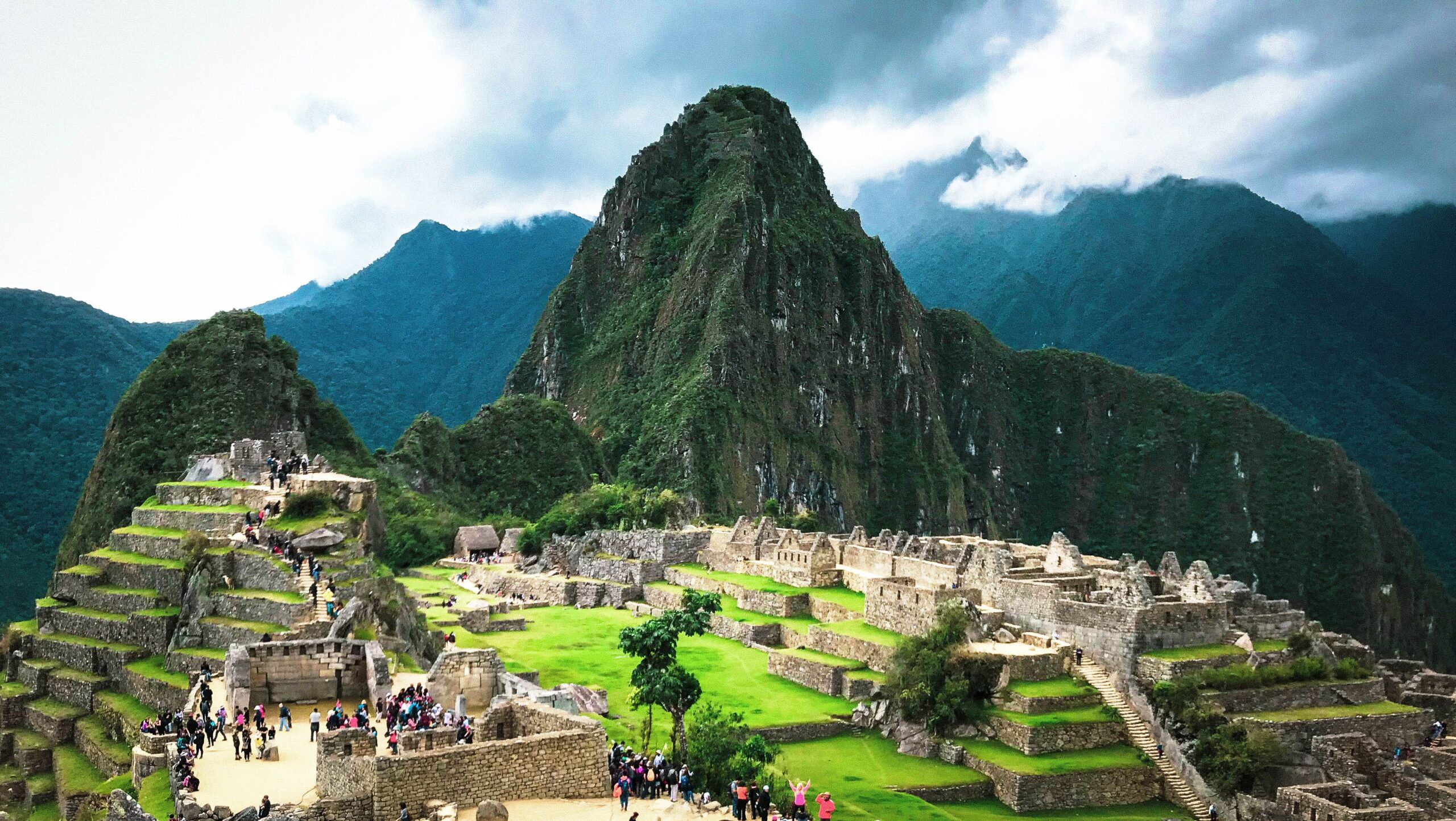
Machu Picchu Tickets and Circuits Guide
Machu Picchu is an extraordinary site created by the human brain. To visit Machu Picchu, you must purchase tickets months ahead of time exclusively through the official Peruvian Ministry of Culture booking engine (tuboleto.cultura.pe), selecting a precise named circuit and a strict 60-minute entry window.
The single best option for first-time visitors is Circuit 2 (Machupicchu Clásico), specifically Route 2-A (Classic Designed) or Route 2-B (Lower Terrace), because it is the only circuit pairing the postcard panoramic terrace view with complete access to the core urban temples, the Sacred Plaza, and the Sacred Rock.
Travelers seeking the summit climb must book Circuit 3-A (Huayna Picchu) at least three to four months in advance. Tickets are strictly capped, tied to your original passport number, and sold out daily; arriving in Aguas Calientes without a confirmed booking is a critical logistical failure.
Essential Logistics at a Glance
| Parameter | Official Specification & Practical Standard |
| Official Booking Portal | tuboleto.cultura.pe (Peruvian Ministry of Culture platform) tuboleto.cultura.pe |
| Advance Booking Window | 3 to 4 months for Circuit 2 and Circuit 3-A (Huayna Picchu); 4 to 8 weeks for Circuit 1 and Circuit 3-B |
| Base Ticket Cost | Foreign Adult: 152 PEN (~$41 USD); University Student: 77 PEN (~$21 USD); Mountain Hikes (Huayna Picchu / MP Mountain): 200 PEN (~$54 USD) |
| Operating Hours | First entrance: 06:00; Final entrance window: 15:00; Sanctuary gates close: 17:30 |
| Peak vs. Off-Peak Hours | Peak: 08:00–11:00 (heavy tour train arrivals); Off-Peak: 06:00–07:00 (early morning mist) and 13:00–15:00 (clearing crowds, golden light) |
| Time Allocation | 2.5 to 3 hours for standard citadel routes; 4.5 to 5.5 hours for mountain hike circuits |
| Physical Difficulty Rating | Moderate to Strenuous: uneven Inca stonework, hundreds of high granite steps, elevation of 2,430 m (7,972 ft) |
Insider Field Notes: Practical Realities at the Gate
The physical layout of the sanctuary entrance creates specific friction points that third-party ticket aggregators rarely explain. Plan around these operational facts before you step up to the turnstiles:
- The Restroom Trap: There are zero bathrooms inside the archaeological sanctuary. The only public toilets are located outside the security perimeter, next to the luggage drop, and require a fee of 2 PEN (cash only; small coins required). Use them 20 minutes before your time slot. Once park officials scan your barcode at the turnstiles, re-entry is impossible. If you leave the ruins to use the bathroom, your ticket is permanently voided.
- The Luggage Checkpoint Limits: Guards enforce strict baggage dimensions at the entry checkpoint. Daypacks cannot exceed 40 x 35 x 20 cm (15.7 x 13.7 x 7.8 in) or a capacity of 20 liters. If your pack exceeds this sizing frame, security officers will divert you to the private luggage storage lockers near the bus turnaround. This diversion costs 5 to 10 PEN and burns 15 to 25 minutes of your ticket’s entry window.
- Equipment Confiscation Rules: Drones, selfie sticks, camera tripods, metal-tipped trekking poles, and umbrellas are banned. If you require trekking poles for joint stability or mobility, they must have rubber tips attached; poles with exposed carbide or metal points are seized at the gate and held until your exit. Handheld action cameras and compact mirrorless cameras are permitted, provided you do not attach external stabilizer rigs or boom arms.
- Checkpoint Queuing Protocols: The entrance plaza features separate roped queue corrals. Staff organizes lines according to circuit type: one queue for Circuit 1 and Circuit 2 (Upper Gate access), and a separate queue for Circuit 3 (Lower Gate access). Gate agents inspect tickets and call entry times in 15-minute intervals. Do not line up an hour early; doing so blocks the turnstiles, and guards will turn you away until your exact time block appears on the gate monitors.
- The Tour Guide Mandate in Practice: While the official park charter states that every foreign visitor must be accompanied by an accredited tour guide (guía oficial de turismo), rangers at the turnstiles do not consistently enforce this rule for individual visitors on standard circuits. However, hiring a licensed freelance guide waiting outside the gate (150 to 200 PEN / ~$40 to $55 USD for a private two-hour group tour) is well worth the cost. Because the ruins operate on a strict, irreversible one-way loop, a guide ensures you do not inadvertently bypass key architectural monuments that you cannot backtrack to see.
Understanding the Official Circuit & Route System
In mid-2024, the Ministry of Culture completely overhauled the entrance system into three official circuits comprising ten specific sub-routes. You are no longer purchasing general admission to explore at leisure; your ticket binds you to a numbered track monitored by park rangers stationed at path intersections. Walking backwards against the arrows or jumping across terrace walls will result in immediate escort off the premises.
                         [SANCTUARY MAIN GATE]
                                   |
         +-------------------------+-------------------------+
         |                                                   |
 [UPPER ENTRANCE CHECKPOINT]                       [LOWER ENTRANCE CHECKPOINT]
         |                                                   |
   +-----+-----+                                             v
   |           |                                    [CIRCUIT 3: REALEZA]
[CIRCUIT 1] [CIRCUIT 2]                                      |
Panoramic    Classic                                         +-------+-------+-------+
   |           |                                             |       |       |       |
   |     +-----+-----+                                     Route   Route   Route   Route
   |     |           |                                      3-A     3-B     3-C     3-D
 Route Route       Route                                  (Wayna  (Royalty (Great  (Huchuy
  1-A   2-A         2-B                                   Picchu) Classic) Cavern) Picchu)
 (MP   (Classic    (Lower
 Mtn)   Designed)   Terrace)
Circuit 1: Panorámico (Panoramic Circuit)
This circuit is engineered around the upper agricultural platforms, delivering elevated vantage points over the entire valley. It prioritizes photography and mountain ascents over close-up architectural study.
- Route 1-A (Machu Picchu Mountain / Montaña Machupicchu): Follows the upper trail past the Guardian’s House and begins a steep, continuous 3- to 4-hour return staircase climb to the apex of the mountain (3,082 m / 10,111 ft). It provides bird’s-eye perspectives looking down at both the citadel and Huayna Picchu, but it does not descend into the stone city.
- Route 1-B (Upper Terrace / Terraza Superior): The most direct path to the iconic postcard shot. You ascend the stone switchbacks directly to the Guardian’s House platform, capture the wide-angle view of the urban sector against Huayna Picchu, and exit along the outer terrace wall. It takes 1.5 to 2 hours and involves no urban sector access.
- Route 1-C (Intipunku / Sun Gate): Available primarily during the high season (June 1 through October 15). It leads hikers up the original Inca Trail approach to the historic pass where multi-day trekkers first sight the ruins.
- Route 1-D (Inca Bridge / Puente Inka): High-season only. A cliff-hugging stone trail leading southwest to the historic timber drawbridge over a sheer drop-off.
Circuit 2: Machu Picchu Clásico (The Classic Circuit)
This is the definitive, all-inclusive ticket that matches what most visitors envision. It covers the classic panorama and guides you through the heart of the masonry.
- Route 2-A (Classic Designed Route / Ruta Diseñada): The premier ticket at the sanctuary. You climb to the high terrace for the postcard shot, pass through the Main City Gate, explore the Dry Moat, navigate the Temple of the Sun (from above), examine the Sacred Plaza and Principal Temple, view the Intihuatana pyramid platform, cross into the Sacred Rock plaza, and pass through the Water Mirrors and Royal Houses before exiting. Total duration: 2.5 to 3 hours.
- Route 2-B (Lower Terrace Route / Ruta Terraza Inferior): Mirrors Route 2-A in its urban coverage, but positions you on the agricultural terrace directly below the Guardian’s House for your initial panoramic photograph. The photographic perspective is nearly identical, making it an equivalent alternative when 2-A is sold out.
Circuit 3: Machupicchu Realeza (Royalty Circuit)
Circuit 3 uses the lower entrance turnstile and bypasses the upper agricultural terraces entirely. It routes you directly into the lower residential quarters, the House of the Inka, and the specialized northern trails.
- Route 3-A (Waynapicchu / Huayna Picchu Mountain): The premier adrenaline route. It traverses the lower farming platforms to the northern checkpoint rock, where climbers tackle the steep, exposed switchbacks and the infamous “Stairs of Death” to reach the northern peak (2,693 m / 8,835 ft). Total time: 4 to 5 hours.
- Route 3-B (Royalty Designed Route / Ruta Diseñada): The standard flat walk through the lower sector, including the agricultural storehouses, the Temple of the Sun lower sector, the House of the Inka, and the Temple of the Condor. It requires far less vertical stair-climbing than Circuits 1 or 2, making it the top choice for travelers with knee issues or mobility challenges. Total time: 2 hours.
- Route 3-C (Great Cavern / Gran Caverna): High-season specialized trekking route navigating behind Huayna Picchu down to the subterranean Temple of the Moon.
- Route 3-D (Huchuy Picchu): High-season trail climbing the small rocky knoll immediately adjacent to the Huayna Picchu checkpoint.
Comparative Evaluation: Official Routes at a Glance
| Circuit & Specific Route | Postcard Panoramic View? | Urban Core Temple Access? | Physical Exertion Level | Ideal Traveler Profile | Key Operational Drawback |
| Circuit 1-B (Upper Terrace) | Yes (Iconic upper angle) | No (Perimeter viewing only) | Low to Moderate (short, steep stair climb) | Photographers; travelers on tight schedules | Misses all interior temples and plazas. |
| Circuit 2-A (Classic Full) | Yes (Full panoramic framing) | Yes (Comprehensive access) | Moderate (~3 km of uneven stone staircases) | First-time visitors wanting the full experience | Sells out 3–4 months in advance. |
| Circuit 2-B (Lower Terrace) | Yes (Slightly lower angle) | Yes (Comprehensive access) | Moderate (identical walking route to 2-A) | First-timers if Route 2-A has sold out | Strict forward-movement pacing by rangers. |
| Circuit 3-A (Huayna Picchu) | No (Skipped entirely at entry) | Partial (Lower sector buildings only) | Very Strenuous (steep drop-offs; vertical steps) | Hikers seeking panoramic summit vistas | Excludes the iconic Guardian’s House view. |
| Circuit 3-B (Royalty) | No (View is from the base upward) | Partial (Lower sector and Condor Temple) | Low (avoids major stair ascents) | Travelers with mobility limits or bad knees | Lacks the elevated postcard perspective. |
| Circuit 1-A (MP Mountain) | Yes (Vast, high-altitude vista) | No (Bypasses urban structures) | Strenuous (1,600+ stone steps, high altitude) | Endurance hikers; landscape photographers | Clouds often obscure the summit after 09:00. |
Step-by-Step Transit Blueprint: Cusco to the Gate
Reaching the citadel requires linking road transport, narrow-gauge rail, and mountain shuttles across the Sacred Valley. Follow this sequenced transit plan:
[Cusco City - 3,400m / 11,152ft]
       |
       |  (Colectivo / Taxi via Sacred Valley Highway: 1h 45m)
       v
[Ollantaytambo Station - 2,792m / 9,160ft]
       |
       |  (PeruRail or Inca Rail Service: 1h 30m)
       v
[Aguas Calientes Station - 2,040m / 6,692ft]
       |
       |  (Consettur Bus Switchback Ascent: 25-30m)
       v
[Machu Picchu Gate Checkpoint - 2,430m / 7,972ft]
Step 1: Cusco to the Rail Terminal (Ollantaytambo)
Most passenger trains depart from Ollantaytambo Station in the Sacred Valley, rather than Cusco proper.
- The Transit Mode: Take a shared minivan (colectivo) departing continuously from Calle Pavitos in downtown Cusco.
- Transit Metrics: Minivans depart as soon as all 14 seats are filled (every 10–15 minutes). Transit time is 1 hour 45 minutes over paved highways. The fare is 10 to 15 PEN (~$3 to $4 USD) per person. Alternatively, a private taxi from any hotel in Cusco to Ollantaytambo costs 120 to 150 PEN (~$32 to $40 USD).
- Required Buffer: Arrive at Ollantaytambo station 30 to 45 minutes before scheduled rail departures. Boarding gates close 10 minutes before departure.
Step 2: The Scenic Train to Aguas Calientes
Two licensed passenger train operators run the track alongside the Urubamba River to the terminus town of Aguas Calientes (Machu Picchu Pueblo):
PeruRail
- Expedition Service: The baseline tourist carriage. Features 2×2 seating, overhead storage, panoramic side windows, and overhead skylight panels. Dependable, clean, and practical ($60 to $85 USD each way).
- Vistadome Service: Upgraded cars with wraparound curved glass ceilings, leather seating, a light regional snack, and an alpaquero fashion performance on the return journey ($85 to $115 USD each way).
- Vistadome Observatory: Includes an open-air outdoor observation car at the rear with an onboard bar and live traditional music ($110 to $145 USD each way).
Inca Rail
- The Voyager: Standard tourist class with comfortable cushioned seats, panoramic viewing glass, and ambient music ($60 to $80 USD each way).
- The 360: Custom-designed panoramic carriages featuring high-arched glass roofs, an outdoor observation platform, and specialized interactive audio guides ($85 to $120 USD each way).
- The First Class: A luxury car operating during peak months, featuring welcome cocktails, a three-course tasting lunch, live Andean instrumentation, and an open observation lounge ($200+ USD each way).
- Enforced Baggage Restriction: Both operators enforce a luggage limit of 5.0 kg / 11.0 lbs per passenger. Standard rolling luggage, large duffels, and oversized trekking backpacks are prohibited on passenger cars. Leave your main bags in the secure luggage room of your hotel in Cusco or Ollantaytambo (most offer this service complimentary) and travel with a single 20-liter daypack.
Step 3: Aguas Calientes to the Sanctuary Gate
The final leg ascends 400 vertical meters up the sheer face of the mountain via the Hiram Bingham switchbacks (Carretera Hiram Bingham).
-
The Consettur Shuttle Bus: Modern green buses depart continuously from the depot on Avenida Hermanos Ayar.
-
Tickets: Buy them at the physical booth in Aguas Calientes or purchase digital tickets online beforehand via
consettur.com. -
Fares: $24 USD round-trip (or $12 USD one-way) for non-resident adults; $12 USD round-trip for children.
-
Duration: 25 to 30 minutes along the cliffside road.
-
Timing Strategy: The morning bus line forms at 05:15 for the earliest entries. The line looks intimidating—frequently stretching two to three city blocks—but moves fast as buses load and dispatch every three minutes. Join the bus queue 45 to 60 minutes prior to your official ticket entry time.
-
-
The Footpath Climb: An alternative stone staircase running directly up the mountain, crossing the switchbacks.
-
Duration: 1.5 to 2 hours of strenuous uphill walking through humid cloud-forest terrain.
-
Recommendation: Skip the hike up. It leaves you sweaty, fatigued, and short on time before tackling the hundreds of stone steps inside the ruins. If you want to hike, take the bus up and walk the path down after finishing your circuit.
-
Step-by-Step Purchase Guide: Avoiding Scams and Markups
Do not buy tickets from unregulated tour brokers or third-party reseller sites that add hidden fees of 30% to 50%. Purchase directly from the Peruvian government:
- Navigate to the Official Portal: Go directly to
tuboleto.cultura.pe. Do not click on sponsored search ads mimicking the platform. - Select the Monument: Select Machu Picchu from the featured archaeological sites list.
- Choose Your Circuit and Route: Under the ticket menu, select your specific route (e.g., Circuito 2 – Ruta 2-A Clásica Diseñada). The portal displays remaining ticket quotas for every single hour of the day.
- Input Personal Identity Details: Enter your full name, date of birth, nationality, and exact passport number. Double-check this entry: an error in your passport number will cause gate agents to reject your ticket at the checkpoint.
- Complete Payment: Pay using an internationally authorized Visa, Mastercard, or American Express card. Ensure your issuing bank has enabled foreign transactions and 3D Secure SMS/app verification, as the Peruvian banking gateway will decline unverified cards.
- Download and Print Your PDF: Save the electronic ticket PDF with its unique visible QR barcode. Print two physical paper copies. Phone batteries drain rapidly in cold mountain morning air, and screen reflections often fail under the optical turnstile scanners.
High-Stakes Pitfalls to Avoid
- Relying on the “In-Person” Aguas Calientes Ticket Quota: The Ministry sets aside up to 1,000 tickets daily for in-person sale at the cultural center in Aguas Calientes. Do not make this your primary plan. Travelers often spend 5 to 8 hours standing in line on cold streets just to receive a numbered wristband that lets them return the next day to purchase leftover afternoon slots (typically Circuit 3-B). It can cost you an entire day of travel.
- Ascending to the Citadel on Day 1 in Peru: Cusco sits at 3,400 m (11,152 ft), whereas Machu Picchu is lower at 2,430 m (7,972 ft). Flying from sea level into Cusco and immediately pushing your body triggers Acute Mountain Sickness (AMS). Instead, land at Alejandro Velasco Astete International Airport (CUZ) in Cusco, hire a car directly to the Sacred Valley (Urubamba at 2,870 m or Ollantaytambo at 2,792 m), and rest there for 36 to 48 hours to acclimatize safely before visiting the ruins.
- Booking Huayna Picchu While Suffering from Vertigo: The upper ascent of Route 3-A crosses the sheer “Stairs of Death,” where narrow Inca steps cling to vertical granite faces over 300-meter drops, secured only by steel cables. If you have severe vertigo or fear of heights, you will likely freeze on the route. Book Route 1-A (Machu Picchu Mountain) instead: it is physically demanding, but follows a wider, terraced trail with minimal sheer exposure.
- Mismatched Departure Stations on Rail Tickets: Train tickets indicate departure points: San Pedro (Cusco city center), Poroy (25 minutes outside Cusco), or Ollantaytambo (1.5 to 2 hours outside Cusco). If you book an Ollantaytambo departure while sleeping at a Cusco hotel, you must be on the road via taxi by 04:00 to catch a 06:30 train. Check your train terminal voucher carefully.
- Carrying Digital-Only Passports: Gate staff require your original, physical passport alongside your printed paper ticket. Photos on smartphones, digital PDFs, police reports, and laminated photocopies are systematically rejected at the turnstile.
Frequently Asked Questions About Machu Picchu Tickets and Circuits Guide
What is the absolute best time of year to visit Machu Picchu?
The optimal travel window is the dry Andean winter from May through September, which delivers clear blue skies, dry trails, and minimal rainfall. The shoulder months of April and October offer excellent weather with lighter crowds. Avoid February, as it is the rainiest month in the region; the Inca Trail is closed the entire month for conservation, and mudslides can disrupt train lines.
What are the main train options between Cusco and Machu Picchu?
Travelers choose between PeruRail (running the budget-friendly Expedition, scenic glass-topped Vistadome, and ultra-luxury Belmond Hiram Bingham) and Inca Rail (operating The Voyager, the panoramic The 360, and The First Class). Both operators run clean, comfortable services along the same rail line from Ollantaytambo to Aguas Calientes in approximately 90 minutes, with comparable reliability.
How far in advance do I need to book a Huayna Picchu hike permit?
You must reserve Circuit 3-A (Huayna Picchu) three to four months in advance, particularly if you plan to visit between May and September. Daily entries are capped at approximately 300 to 400 hikers across staggered early morning time slots, making it the first permit category to sell out on the official government website.
Can you tour Machu Picchu without hiring a guide?
Yes, independent travelers can enter the sanctuary without a guide on standard circuits. Although park regulations state that guides are mandatory, gate personnel at the turnstiles rarely enforce this requirement for general admission ticket holders. Even so, hiring an accredited guide outside the gates is worthwhile to understand the site’s layout and avoid missing key features along the one-way routes.
How do you do a day trip to Machu Picchu from Cusco?
Catch an early morning taxi or shared colectivo from Cusco to the Ollantaytambo train station (1 hour 45 minutes), board an early train to Aguas Calientes (1.5 hours), and take the Consettur shuttle bus up to the citadel entrance (30 minutes). After completing your 2.5-hour circuit, reverse the entire route back to Cusco. The journey takes 12 to 14 hours round-trip, so staying overnight in Ollantaytambo or Aguas Calientes makes for a much smoother, less rushed visit.